Money Matters Newsletter

Seminar this week. How to own and operate a small business. Turkey Matters goes nuclear!~ Update October 21, 2018

Only a few days left !  A informative and eye opening event with so many tips and great information even existing business owners will benefit way beyone the small admission fee.

Seats are limited and its a small venue to grab your ticket now~!


------------------------------------------------------------------------------------

Turkey Matters!

Help me feed the hungry this Thanksgiving. Turkey Matters matching program. Looking for heavy hitters to match my $1,000.00 check AND looking for people wanting to help me buy Turkeys for folks this season. Turkeys run about 12 bucks so decide how many you want to buy and make your check out to "IFM Food Bank' and mail to

KVMR FM
ATTENTION TURKEY/ MARC CUNIBERTI
101 BRIDGE STREET
NEVADA CITY.  CA 95959

(check must be mailed to KVMR to qualify and do not make the check out to KVMR or me. A $1,000 check will be given to IFM by me. I will also match funds up to a certain amount then match a portion of your funds making your donation go that much farther) 

Thank you sooooo much for helping me and get those checks in!~ 


Last Years Heavy Hitters participants and thank you!

-----------------------------------------------------------------


Fixed income gets hammered


239739

For the second time in as many years, conservative investors holding bonds are sweating bullets and seeing red in balances as bonds tanked a few weeks back. This also means interest rates conversely rose with some reasonable velocity as the two move opposite of each other. The last time this happened was right after Trump was elected in the fall of 2016.The speed at which fixed income (investments with a fixed return as a prerequisite) fell in late 2016 caused news headlines to shout things like “carnage” in an otherwise mundane area of investing, the bond market.Now once again the rout made headlines. In their Oct 8, 2018 article entitled “Bonds in $916 Billion Wipeout Spark Fear of Worst Run Since 1976”, the author goes on to highlight the eye-popping amount trimmed off aggregate bond prices which is the 916 billion mentioned in the title.No doubt  some conservative investors, thinking there portfolios held investments that were safe and therefore shouldn’t move much,  likely put calls into their advisors or twisted up their brokerage statements as the bond rout became reality in the form of  declining portfolio balances.The strong U.S. economy, rising inflationary pressure and the Federal Reserve’s statements on continuing expected increases in a key rate called the “Fed Funds Rate” may be some of the reasons for the bond sell off. Bond prices generally move opposite of interest rates, whereas if rates rise, bonds will tend to fall. The duration of the bond (maturity) determines how much the bond will react to interest rates moves.Generally speaking, markets hate surprises and fast jerking prices in either direction in bonds or stocks can disrupt an otherwise calm market, which some may argue was the climate in stocks and bonds prior to the beginning of the bond sell off.Bonds are IOU’s from whoever, meaning there exists corporate, state or federal bonds as well as a plethora of others. They offer different yields and maturities and even have a few different ways that they can pay you.They are also rated from investment grade to junk and all levels in between and the description is self-explanatory. What investors may not know is the “junk’ is sometimes added to the cream (the better bonds) to boost returns on funds that might have names like ‘income fund’ or ‘high yield funds”.These funds won’t use the name junk of course, but do have to reveal the rating on everything they hold in their financials. Usually bonds hanging around the “junk” moniker have a tendency to move more violently then the higher graded stuff and all of them move in opposite of maturity. This means the longer the maturity date (expiration date) the more susceptible they are to rate movements and therefore are usually more volatile.Investors can lessen the volatility of their bond portfolio by choosing shorter duration and higher graded holdings but with this adjustment also comes lower yields. There are no free lunches it is said.For now at least, the bond market could be said to be in turmoil, at least for those investors holding the longer term ones.Of course with pain for some also comes pleasure for others. As is usually the case in markets, when somebody loses money, others are happily picking it up on the other side of the trade.Sound advice for all investors is to remain calm, be patient and if necessary or nervous, review your holdings to make sure you are not over exposed in any one area. Market upsets don’t last forever and running with a stampeding panicked herd can be hazardous to one’s portfolio health.

This article expresses the opinions of Marc Cuniberti and are opinions only and should not be construed or acted upon as individual investment advice. Mr. Cuniberti is an Investment Advisor Representative through Cambridge Investment Research Advisors, Inc., a Registered Investment Advisor. Marc can be contacted at SMC Wealth Management, 164 Maple St #1, Auburn, CA 95603 (530) 559-1214. SMC and Cambridge are not affiliated. His website is www.moneymanagementradio.com. California Insurance License # OL34249


Business Seminar Coming up! Read Money Matters update

Come Join us for business basics, operating new and existing businesses, tips on starting one, and the mindset to do it all!


Money Matters update September 26, 2018

Hello Money Fans,

The next show is October 4, 2018 at noon PST on KVMR. Tune in. Been a long slug in the markets with the old Dow high of 26616 being eclipsed last week. Will it hold? We will see. Its a good sign for people betting the market will go up. I have included an article I penned on the state of the Economy, at least by the stats I follow. Many will debate whether we have a booming economy for all, and I am of the opinion the answer is a resounding NO. Many are suffering but that is the Federal Reserves fault and years of bad policy by Washington. The blame cannot be laid at any one persons feet, but rather at the feet of many in a long line of economic meatheads that do not understand the way all things money on a grand scale operate but that is a story for another day. For now enjoy the articles below and contact me for money management, retirement solutions, insurance and annuities. 

--------------------------

An economy on fire or a forest fire starting? 

234009

As a fairly visible economist (San Diego- B.A Economics 1974) and financial advisor due to my personal media exposure, I get tons of email both economic and political. I learned a long time ago to be in the public eye and spout personal politics is asking for incoming flak. As a result I stay well away from espousing political viewpoints for the most part. I do favor, economically speaking (because I am an economic guy) a free market in most things and that in itself draws fire from some but I take it with tasty grains of salt when I do.

That being said, I must admit most folks don’t really understand how markets really work and get their education from their preferred aisle of the political pulpit and in doing so are usually a little misinformed to grossly uneducated. In fact, I grow weary of the same old mantras and one liners from minimally economically educated (because how many people really study economics) who espouse whatever party line they read or hear on public media. Arguing with some is an exercise in futility as even the fact that I may know a bit more about an economy than they do does little to quell the notion they (usually with little or no economic education) know more about the economy how it works then I do.

I try not to banter or debate such people or their rhetoric as once you remove fact from the argument, what remains is only bias thinking mostly based on skewed facts and unsubstantiated figures twisted into such by whatever party seems to be favored. Basically people lean into Trump or against him and based on that out comes the so called true state of the economy, the reality of the rich and the plight of the working stiff.

Throwing aside the misinformation and unwavering devotion toward whatever party someone might support, the closest we can get to assessing whether the economy is doing well or not under the current administration is to look at the closest thing to fact we have (note I said “closest”) and only then can we arrive at our best guess as to how the engine of business is running.

Although I doubt the accuracy of the government reporting agencies where most stats come from, we have little alternative but to draw at least some valid conclusions from those agencies which employ hundreds of government economists and analysts to tell us how Uncle Sam is doing money wise.

On the employment front, jobless claims are the lowest they have been since 1969 (Wall Street Journal) and yes, the methodology is constantly being changed by the reporting agencies but this is what we have. The stock market is close to all times highs (Dow Jones Industrial Average) and the U.S. trade gap is narrowing which means we are gaining in selling more exports versus what we import (Wall Street Journal). Manufacturing is up for the second straight month and U.S. non-manufacturing is also up. The tax reform albeit small has undoubtedly also helped the markets and those that manufacturer the things we buy and sell.

The Wall Street Journal also joins other news media reporting that inflation is heating up and although unpalatable, all these statistics when taken in mass point towards an economy that may be doing a heck of a lot better than in years past.

I know one side of aisle will point to other statistics that illustrate perhaps the polar opposite of a healthy economy, but seeing as stats can be manipulated AND fabricated by just about everyone, we have to put more weight into something and I choose to at least somewhat believe the plain old vanilla statistics put out by the various government agencies instead of politically motivated media outlets.

 I also look only at the statistics I deem valuable and directional, meaning they have a good track record of portraying what may be actually happening in the hallways, lobbies and storefronts of American businesses.

I know there are some out there who will argue the current economy is in shambles but if we remove the mask of bias and take the statistics for what they are really telling us, the economy and American businesses have seen much worse.

In fact, if I was to give my educated opinion, the economy hasn’t been this healthy in decades. Not to say bad things can’t happen or that the economy will continue to blossom (although in my opinion it will for a few years anyway barring some unforeseen catastrophe), for the most part, the changes in how business is treated by Washington has gone a long way in putting our economy back together from many years of bad medicine initiated by same.


-------------------------

This has been a hard week for my family but this too will pass


I just packed up my oldest son Kyle and spent the weekend dropping him off and getting him settled at UC Irvine where he is now a first year freshman. Kyle was a straight A student in high school, athlete of the year 2018, homecoming King, had a Senate Internship, participated in the Food Bank of Nevada County for 3 years and besides the other extra-curricular activities he was a part of, even penned a few articles here in the Territorial Dispatch.

Of my three kids, he is the most dynamic as far as outgoing and what I would deem “at risk”, being exploratory and inquisitive. I can honestly say I dreaded this day for years and now that it’s here and his room is empty, I know the pain of sending a child off into the world.

Not that I don’t know loss, I do. I lost both my older brothers when I was a teen, one by suicide and one two years later by motorcycle accident. I saw what that did to my parents, especially my father, who really never was the same after that. So I know a dreaded loss all too well.

I know I cannot compare losing a child through death and sending one off to school. One obviously is much more painful and horrendous. And I know there are parents out there who would give anything to send their child, who may have passed, off to college in lieu of losing them forever through death. And in that thought comes at least some odd sort of comfort, knowing the dreadful alternative. I am so fortunate to have a child to send off anywhere, when some have no children and others have lost them.

And for this I am thankful. Kyle is an amazing young adult, and at this moment in time I miss him terribly. To feel so only means I have an amazing person as a son, and I love him dearly and know he loves me. But it still hurts.

I know this is the way of the world and parents have been sending their kids away and off into the world since time began and I am only one in a long line of parents who have experienced this. I too know the feeling will pass in time, and I like many parents will look forward to holidays and summers when their shiny faces will again grace the family home, and extra plates will be set at the table, the exact amount of plates that were there when they were young and learning their way.

Kyle grew up in Grass Valley and went to a small private high school and now is at a school with 36,000 students located on the outskirts of Los Angeles and for this I am glad. He will now see the real world of the big city and learn so much more in the school and the surrounding areas. He was already wide eyed and opened mouth while we drove through Newport Beach and saw a Maserati, Bugatti, Ferrari and McLaren auto dealerships all within a quarter mile of each other. Before then, Kyle could only see these cars in photos. Now he saw hundreds of them for real, for sale and up close and personal. One real world example of what places outside of Grass Valley hold in store for him.

I am sure Kyle will probably drink too much beer some night, and miss church, get a girlfriend or three, play some prank and do something way too dangerous for his parents liking and I can’t stop him from any of these things. The reality is that he is 8 hours away by car at school and is his own adult person now. And it brings to mind the first part of the serenity prayer; “God grand me the serenity to accept the things I cannot change…..”

And I wouldn’t change it if I could. Kyle’s time has come to leave the nest and become his own person and I know this is what has to happen. And no, I don’t particularly like the feelings I am having right now, at least some of them. They hurt and remind me of other losses. But that’s life and I am glad he has arrived at his time of blossom and will now go make his mark on the world. A world which so desperately needs adults like Kyle. So for now, my wife and I will finish raising his younger brother and sister and soon send them off to college one day, and maybe it will get a little easier next time around.

Or maybe not.

But however I feel then and now, I know it’s the right feelings to have and I thank God for blessing me with the reasons for feeling them.


Marc Cuniberti hosts Money Matters on KVMR FM which is carried on 65 stations nationwide. He is a financial columnist for a variety of publications and Head Varsity Baseball coach at FLCS. His is the owner of Bay Area Process Inc. and holds California Insurance Lic # OL34249. Marc holds a BA in Economics from SDU with honors and is a big brother for BBBS of Nevada County. He produces the “Investing in Community’ video series as a public awareness program for social media. His website is moneymanagementradio.com and he can be reached at (530) 559-1214. His videos can be found on Facebook (FB) under Marc Cuniberti and also on the "Money Matters Investing in Community" FB page.


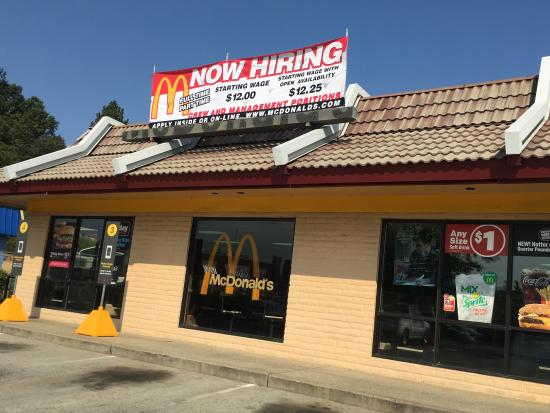
McDonalds looking for workers? Tune Thursday September 6, 2018 for phone madness

Hi  y'all.

So I posted this picture on social media with a caption that went something like " I see little reason someone who is able bodied should be holding a sign saying money needed".

The internet exploded on this and comments went off the charts pro and con and in all directions. So much so McDonalds raised the rate to the new sign two days later.

With so much controversary in all directions the show will be devoted to open debate from listeners.

Tune in Thursday September 6th 2018  noon PST on KVMR FM or worldwide on KVMR.ORG

And do not forget to call in.

All for now, and blessings!

Marc


Update August 9, 2018

Is the economy broken and running on fumes? 

Or is it ready to race.

Hi Money Matters fans, 

So hot summers lead to cooler falls yet the market did not experience the slow down typical of summers, at least in my opinion. We have been positive the markets since November 2016 and I remain positive until I see other signs saying its time to be careful. That said, we all have to plan for retirment and here is how and why:


------------------------


How much have you saved for retirement?


If you’re like the majority of Americans, probably not enough to retire comfortably.
In actuality the figures of how much people have squirreled away for their golden years is disturbing.
In order to better grasp the problem at hand facing many Americans, the first question to be asked is how Much does one need to have in order to retire in the lifestyle one is accustomed to.
Right from the get go we become astutely aware of how much of a problem we have as a nation of greying individuals.
From a survey by bankrate.com an eye popping 61% of those asked didn’t know how much money one needed to save for retirement.
Ouch. That’s a big problem.
Obviously not having a clue of how much money you will need erects a huge barrier to actually preparing for the so called golden years. It’s hard to prepare when you don’t know how much gold you’ll need!
In the same survey. 8% of those queries responded they never plan to retire. I’m not exactly sure what that means but assuming not everyone enjoys their job enough to do it until they kick the bucket, it’s a foregone conclusion that some of these folks already know they don’t and won’t have enough retirement money when their Walking canes arrive in the mail.
The amount one needs to relax into their rocking chairs for the duration obviously varies from person to person but from a Fidelity statistical survey comes more dire news: People ages 40-49 have saved an average of $91,000, ages 50-59 $152,000 and ages 60-69 their savings average $167,700.
Doing some simple math and assuming you live to 80, and stop working at 69, using the $167,700 figure, you’ll get about $1200 a month. Better hope the portfolio sees some growth. Retire earlier or not having saved as much only paints less desirable picture.
Taking into consideration that nearly half of Americans have no savings at all from a study by the Economic Policy Institute and the picture turns into more of a depressing illustration of just how badly things will be for many.
Social Security will of course help but will leave much to be desired when it comes to fully funding your days on the porch swing. Add in some medical costs which is likely a forgone conclusion and you kind of get the overall impression many people are going to have to rely on public assistant and the kind hearts of their friends, neighbors
And relatives to survive.
Social Security was only designed as a supplement but like many concepts in life, what meant and what was morphed by the minds of some are two entirely different things.
The fact remains if you want to have a better afterlife (as in post working) you better get your  rear end in gear and give some serious grey matter to the issue, then regularly add some of the green stuff  to a retirement account somewhere.
Anything you save will be better than nothing and each penny of it will go to helping you and you alone into a better life after you stop working.
After all, having some plan is better than having no plan at all. And if your plan revolves solely around what others have planned for you, odds are you will be sorely disappointed.


--------------------------------


Will you have enough to live comfortably?

Or be at the beck and call of others for your income?


There are many ways to guarantee income into your golden years. Here is one of the more popular ones:

I wasn’t a big fan of annuities for the longest time. I saw too many of them with high fees, complicated terms and so many hooks I had to get out my tackle box to house them all. That said, when I started offering annuities to clients with specific needs and desires not too long ago, I reviewed literally hundreds of them and in the pile I have found a few I thought advantageous.

First off, the description of annuity I like to use is a contract between an insurance company and a person that stipulates in return for a sum of money paid by the client, the company will promise payments over a period of time or even a lump sum at the conclusion of the contract. Annuities have all sorts of versions and terms but just know the contract is a promise to pay. How, when and how much depends on the contract.

The promise is a good as the company making it so realize they are not guaranteed by the U.S. government in any way, shape or form. You can pay the company a sum of money in a lump or over time. The annuity can be tied to a moving target such as a stock index or be just a fixed rate of return. There are other variations and they literally come in all shapes and sizes.

Without getting too technical, annuities can have a tie up period where the client has to commit to leaving at least some of the money with the company for a specified length of time. Some allow a portion of money to be taken out at certain times at the clients option and most have a hardship clause that allow for special circumstances such as a death of the primary person(s) specified in the contract.

I find that investors who want a stream of income later in life that won’t go away or cannot stomach the ups and downs of markets are primary candidates for annuities but know that annuities are not for everyone nor should they be offered up carte blanche to all investors.

Certain investors will ask me for an annuity and others have to be explained as to how they work. As an advisory, I am approached by annuity companies trying to get me to offer their particular version but honestly, I find all but a handful of annuities way too complicated for most investors. Sure I could place a complicated annuity with a client but I wouldn’t do that knowing the client doesn’t fully understand how they operate. Truthfully some are so complicated I have to study them for an hour or two in order to fully understand them myself and I’m in the business!

The annuities I lean towards are the ones that are straight forward and simple. The terms are clear and usually there are not a whole lot of them compared to others. My thinking is if I can explain it to a client and they understand how it works, it will be better for all concerned, which is the investor, the advisor and the insurance company writing the contract.

The regulations and oversight on annuities is severe and very strict and protection to the consumer is a lot better than it was decades ago where annuities where sometimes regarded one of the black boxes of financial products.

Not so today. Many are simple, easy to understand and perform as promised. The importance of understanding them by both the client and advisor is tantamount to a successful placement and an honest and straight forward conversation by both parties is the cornerstone of that success.

Investors should carefully consider the investment objectives, risks, fees and expenses before investing. For this and other important information please obtain the investment company fund prospectus and disclosure documents from your Rep/Advisor. Read this information carefully before investing. Guarantees are based on the claims paying ability of the issuing insurance company.

This article expresses the opinions of Marc Cuniberti and are opinions only and should not be construed or acted upon as individual investment advice. Mr. Cuniberti is an Investment Advisor Representative through Cambridge Investment Research Advisors, Inc., a Registered Investment Advisor. Marc can be contacted at SMC Wealth Management, 164 Maple St #1, Auburn, CA 95603 (530) 559-1214. SMC and Cambridge are not affiliated. His website is www.moneymanagementradio.com. California Insurance License # OL34249. Indexes may not be invested into directly and consider consulting a qualified financial advisor if you have any questions or concerns and before making any investments decisions.


For retirment solutions please call me for a no cost sit down to reveiw your plans.


Marc Cuniberti  (530) 559-1214


Sustainable Green Portfolio- Update June 4, 2018

Hi kids,

Take a look at the new fund I made for sustainable and green investing! Call me but to read about some ideas I have for it, read below!

(530) 559-1214


Investing in solar can be done actually in two ways. You can buy or rent a `system` to provide power to your workplace or abode or add the stocks of solar companies to your investment portfolio. Adding a solar `system` will help lower both your electric bill and the carbon emissions in our environment.

I actually installed a `system` on my home about 3 years ago using the lease `system` program.  I paid nothing for the equipment and now just pay a flat fee to the solar company for each Kilowatt it generates. The price I pay is a lot lower than the upper tiers of charges that PG&E bangs me for so it’s a win-win for myself and the company that put my `system` in. I also pay no maintenance fees and if it breaks they fix it at their expense. Pretty neat deal if I do say so myself.

Although solar stocks have gone up and down and down and up with no real clues as to where they might go next, and with a spotty history of success as to returning investor dollars with any positive returns, the latest statistics might point to a change of direction in the future for those throwing their hard earned investment dollars in the suns direction. California ranks number five in the world geographies in solar capacity. Not too surprising given the number of tree huggers living in the state, as well as having lots of sunshine and also being geographically ginormous. The statistic certainly adds an even an brighter light to an already sunny state.

Adding even more fuel to the solar fire (pun intended) is the latest ruling from the California Energy Commission which mandated all newly constructed homes have solar panels. There are of course hooks, crooks and stipulations surrounding the new regulation but in a nutshell the amount of solar powered homes is expected to jump six-fold by the year 2020. Putting that in real numbers, today about 15,000 new homes and 135,000 occupied homes are fitted each annually. Those numbers jump to an estimated 100,000 new systems and overall about 235,000 in total.

Of course, few things come without a cost and new home owners will pony up an additional ten grand or more to comply with the mandate. The homebuilders meanwhile aren’t too wild about having to raise prices to the home buying public, especially sensitive to the latest figures just out on the number of homes being sold coupled with interest rates on the rise. All this likely spells more difficulty for the homebuilders and it remains to be seen just how these companies will cope with the challenges. Of course there is cheering and jeering on from both sides of the room once again as governmental mandates which alter costs and charges to consumers and companies always manage to stir the pot of debate and this latest regulation is no exception.

No doubt the environmental advocates will cheer on the regulation as a victory for their side while the free market proponents will tout this is just another example of government interference and meddling all the while adding to the ever rising cost of living for the average Joe, not to mention the loss of jobs in the homebuilding industry should sales slow because of it.

No matter where you stand on the issue, no doubt there will be more solar systems sold and that means the companies that make all things solar may reap the rewards. That being said, investing is never that easy, and be aware that the news is already public and that means it could already be baked into the proverbial cake of stock prices. Additionally the history of solar upstarts is littered with dead bodies and one only needs to look at the last time government dipped its hands into solar when the Obama administration in early 2009  loaned Solyndra 535 million of stimulus money only to see those funds disappear down the rat hole of a bankruptcy filing.

Opps…..

More often they many care to admit, where the government goes, private business often follows in straitjackets meaning central planning and private enterprise usually don’t mix well. Investors should heed the not so obvious caveats and use more than due diligence before following the governments lead into solar with their investing dollars.


Update on the markets and more- May 2, 2018

Income Portfolio- Call for details


Hello Money Matters listeners and readers,

Well the markets seem to be in some sort of limbo bouncing around 23,000/24,000 levels and although some stocks are moving up, others are moving down and some are sideways. The Dow has been basically stuck in a rut compared to the last year or so.
So what is going on?

It is hard to say but the two sell offs since February might have put some fear into investors. The ongoing Trump issues seem to hit the news wires daily and no one really knows what the heck he might do. Tax reductions are helping some families and businesses but the geopolitical events tend to slingshot the markets back and forth depending on the day. I am looking hard at inflation and therefore energy and metals and we are positioned accordingly. Consumer staple companies, the ones that make food, cleaning stuff and the like have been hit hard with other retail stocks suffering from (here is a new coined word by yours truly) “Amazonenza”, meaning the online retail juggernaut is shaking retailers worldwide as well as the old stalwarts like the ones the make the stuff in your cabinet and pantry. Amazon CEO Jeff Bezos is definitely a world changer. Whether you like Amazon or not, you cannot deny its effect and change in the world of how we buy things. That being said, let’s move on to some insights as to inflation, making a budget and an old favorite, dividend stocks. Read on….


-------------------------------------------

 

Inflation starting to heat up? 
Humm......


Are commodities waking up?

Simply put, commodities are the things that the things we might buy are made of. They include items such as certain food stuffs, energy fuels, metals and precious metals. You might assume that a booming economy would increase demand for commodities. It seems a logical conclusion but note I didn’t say a booming stock market, although a rising stock market is sometimes mistaken for a booming economy. The fact remains sometimes it is and sometimes it isn’t.

Look at the stock market since 2010. Although measured by the Dow Jones Industrial Average (DJIA) which has more than tripled from late spring 2009 to where it is today, these basic items called commodities have languished. In a Feb 20th, 2017 article by Forbes entitled “Commodities have been down for so long….” author Daniel Fisher summed up the stark reality of commodities performance by saying “The U.S. Commodity Index Fund, not surprisingly, has a five-year record of negative 8.4% a year”

This would cause some to ask: why, if the market is rising for so many years, are commodities not participating in the increase?

That was a question I answered in my December 13, 2017 article entitled “Commodities- Is the rally for real” which basically put forth the argument the stock market rally might not be because of the increased demand for stuff, but rather just an increase in the demand of stock ownership.

Fast forward to today and in taking another look at commodities since that article hit the airwaves, there is indeed some signs some might argue that the bungee cord type of relationship between the stock market and commodities might finally be reaching its snap back point.

In a recent article by Greg Guenther entitled “Revealed: A New Commodity Rally has Arrived” , he makes the argument that commodities may finally be being pulled upwards by real demand by manufactures who in turn are responding to a real increase in demand by consumers buying more stuff. Energy prices have popped higher in April along with the precious metal gold whose price is stealthily approaching its January 2018 highs. The next milestone so says Mr. Guenther, is gold’s next stop of the July 2016 high of $1,377.00 an ounce. Meanwhile Guenther notes that shares of companies that mine the metal have yet to confirm an upward trend in the yellow metal of Midas and therefore commodities in general.

The industrial metal copper also plays an important part to trying to predict where things might go or so some analysts believe. Dr. Copper as copper is sometimes called for its purported relationship to future market movements, is also rising and testing its January highs. It is believed by some that copper, being used in many an industrial application, and will rise in price as industrial products become more in demand. Copper it is thought can therefore sniff out a coming rally in the stock market. Copper popped 3% on April 20th causing those that believe Dr. Copper is indeed a precursor to market movement to sit up and take notice. As indicated in my above referenced December article on the validity of the stock market rally and its relationship to commodities, I am of the opinion that if this market rally is for real, the rise in commodity pricing will eventually have to follow.

Only time will tell if Dr. Copper will continue its ascent and follow the recent rise in the energy and gold sectors, but if not, it won’t be the first convincing head fake that fools those believing in such relationships and it likely won’t be the last. Once again we realize hindsight is foresight and only in hindsight will we know if recent price increase in certain asset classes are indeed telling us which way the markets will go.

Keep in mind no one can predict future market movements with certainty and that includes Dr. Copper and its followers or any other asset class one may tend to look at.

-----------------------------------------------------

Take some time to make a budget!


Daily budgets are rarely made by families but doing so can be highly educational as it highlights what one spends and where the money is going. I don’t know of anyone that can’t benefit from a detailed budget written down on paper and then reviewed by all members of the family.  Actually sitting down and doing it seems a daunting task but biting the bullet and doing one will likely pay healthy and needed dividends.

I can almost guarantee taking the time to perform this task will be akin to finding money in your mailbox. How much you find will depend on how much you spend each month and how accurately and honest your budget is. Yes, honesty is a weird word to use here but if you think about it for a bit, you can conjure up a few instances why one might not be 100% honest on a budget. The reasons for dishonesty might run the gamut from a harmless hobby you don’t want to give up on to a more ominous reason such as feeding an addiction that consumes funds.

Whatever the details, making a budget will always yield something worthwhile and so it’s a great exercise to do. If you or your family is struggling to make ends meet, this is all the more reason you should consider doing it.

When making out your budget, its best to have your checkbook and credit card statements handy as these could highlight something your memory might fail you at. The point here is you want to list everything you spend money on, both reoccurring and the one-off expenditures. Those one-off expenditures are obviously scrutinized in hindsight since they may not reoccur. They may however illustrate whether a good decision or bad one had been made for the expenditure.

Start by listing every dollar that went out whether reoccurring or not. Do this for several months in a row if you have the fortitude to do so, otherwise a one month review is better than nothing.

After listing all your expenses, list your incomes for the family or yourself if doing this on your own. You will end up with a conclusion, of which you already may realize, of whether you’re operating in the red (spending more than you take in) or in the black which means you make more than you spend.

No matter what side of the spending aisle you fall on, the goal here is to be able to actually see and compare where your money is going.

Next determine what spending is discretionary and which is mandatory. A mandatory spending destination might be a mortgage payment (paying the minimum required) while a discretionary one might be a movie or date night. I like to list the items in order of summation meaning the largest expenditures in order to the smallest. Then list the semi-discretionary items such as cable TV, an optional data plan on your phone or fancy steaks in lieu of hamburger when you grocery shop.

First, take your monthly income and subtract the mandatory items. The remaining amount will be what is left over for discretionary and semi-discretionary spending. The first items to then review for cutting is the purely discretionary spending. This is where will you find the easiest “mailbox” money.

Do you spend a lot going out to eat, buying three pairs of shoes or going to five movies a month with candy and popcorn? It’s not rocket science to think of ways to cut. Buy your candy out (the theaters won’t like it buy hey), forego the sodas (your body will thank you) and try renting a movie at home once in a while. DVD’s are free at the library don’t ya know.

In any case, discretionary spending is usually higher than people think and once illustrated in an “in your face” spreadsheet, the “red face” of embarrassment over where your money is really going usually appears.

Don’t be embarrassed. We all get a little “frowny faced” when we see just what and where we are possibly wasting our money on.

One can also usually find money in the semi-discretionary column as well. Larger than necessary phone plans or excess luxuries like dry cleaning or cell phones for the 7 year old also can steal funds that may needed elsewhere for more basic needs.

Once in a while a mandatory large item is found to be the main culprit and a major change must be made. This might be too large of a house or car, too long of a commute or other item that may seem mandatory. But considering a onetime major overhaul in this area could significantly improve one’s financial condition and find the largest amount of money. This might include moving to a smaller house or closer to work or getting rid of the extra car.

The point is to make a budget first and worry about what’s on it once it’s made. Making a few small changes in your spending habits can make big differences over a long period of time. Look for pennies and the dollars will find you.


-------------------------------------

 

What is a dividend?

Dividends are payments by companies to people who own their stock. When we think of a bank savings account we think of the interest they might pay us. With stocks, there can be different types of payments and dividends are one kind of payment. Think of it like a thank you note for buying a company’s stock. Some stocks and funds pay dividends and some do not.

Let’s say you buy a stock of Jack’s Warehouse (fictional). The stock is a dividend paying stock. Let’s also say you buy a share of Jill Muffin Company (fictional) and Jill’s doesn’t pay a dividend.

Jacks stock says it will pay a dollar a share annually, paying 25 cents on a certain day every three months. Over the course of a year, that amounts to a buck. Note I didn’t say a percentage but an actual dollar amount and in this case a buck.

For sake of example, say you bought both Jill’s stock and Jacks stock at 10 bucks on January first and at the end of the year both stocks are at 11 bucks. Each had the same increase in price, one dollar from ten to eleven. Both stocks made 10% for you. Jacks stock however also paid you a dividend of a dollar. Nice.

Keeping mind dividends are listed in dollar amounts and not percentages, if you buy a stock for ten bucks and get a dollar dividend you made 10 % on the dividend. However if the stock drops in price such as in a market crash, and the company keeps the dividend, the next buyer, since he buys the stock at a lower price, say 8 bucks, he still gets a dollar a share in dividends so he makes more percentage wise and in that particular case comes out to 12.5 %. One reason why if you buy dividend stocks you might make the argument you like market crashes because your yield percentage wise is greater.

Can a dividend be cut, eliminated or even increased? Absolutely. Dividends are not guaranteed. But keep this in mind. Usually company CEOS, VPS’s and board members get stock as part of their compensation. So they benefit from the dividends as well. The more shares they hold the more they make as well. The dirty little secret however is dividends can be taxed at lower rates then salaries. Single taxpayers can now make $50,600 (in 2018) and still qualify for the zero-percent tax on dividends and capital gains.  Joint filers and surviving spouses can make $101,200, and head of household filers can make $75,700.

 When you compare that to personal income statistics in the U.S., you’ll see that about 70% of taxpayers in the U.S. can qualify for the zero rate on dividends and capital gains!

Even if you make too much money to qualify for the 0% tax rate on dividends and capital gains, you can still qualify for a special low 15% rate.

So do you think company execs want to cut or eliminate your dividend when they get them too and might pay less tax than their salaries?

All in all if you like the possibility of income or just growing your nest egg, and you consider some stocks pay dividends and some don’t, which  would you rather own?

For more information feel free to contact me below.


 
Syndicate content