Money Matters Newsletter

Bitcoin Troubles My take Upate May 19, 2021


Currency or Con? 


With the explosion both in investor interest and price action, crypto currencies is a hot topic.  Originally conceived as an alternative currency, Bitcoin was the first digital money to make its debut in 2009. Since then, over 4000 different cyber coins have hit the market. The allure is that it reportedly cannot be manipulated or eliminated by any one person, entity or government. Created and stored in cyber space, the argument appeared to be a valid one.

Since their creation, stories of overnight millionaires abound, and I am hearing more of these rags to riches stories everyday.  And it’s not just about making a few bucks. If what I am told is to be believed, ungodly sums of money has been made for more than a few acquaintances.

I have to admit, I can’t say I understand fully how crypto works. I would guess neither do many of its investors.

What I can say is this has all the trappings of a mania. From the buzz, to the quick profits by the inexperienced, to the price charts and right down to the “this time it’s different” story, it reeks of a mania.

Similar to dot.com, real estate and a thousand other “get rich quick” methods and schemes, it has all the classic signs and then some.

I have issues with crypto. I own a small amount through a Wall Street vehicle and not on any phone app. Stories of investors losing passwords or hacked apps resulting in absconded funds abound. One investor profiled in a Wall Street article was locked out of 100 million and only had two chances left to remember his 132-character password before losing this fortune into the black hole of cyberspace.

And no, there is no one you can call. Once it’s locked, it’s essentially gone forever.

Besides the “too good to be true” aspects of all the stories and overnight zillionaires, cyber coin will never, at least in its current form, function as a valid currency.

Currencies must possess a variety of characteristics, among which one of the most important is “store of value”.  This means if you take a currency for something real, you must be sure the currency you received maintains the value it had when you took it.

Think Mexican Peso.

No problem you say?  It will eventually, if not overnight, skyrocket in price?

A skyrocketing price is not a store of value. Store of value must be in both directions.  Which means both the buyer and the seller must not lose value over time in the transaction. Simply put, for every winner in cyber coin, there is a loser. Which is why currencies must be STABLE, and not fluctuate in value and what it can buy.

It’s a hard concept to digest, with most investors thinking they will gladly take a cyber-coin for payment. Ah, but would you pay one out to buy something?

A currency must remain at relatively the same value over time to be a valid receipt of products or services, as that is what a currency is, a receipt of a consistent value.

Cyber-coin is anything but price stable.

A few other things bother me about sinking thousands into cyber-coin.Elon Musk, the maverick founder of Tesla, appeared on Saturday Night live and then two days later tweeted Tesla would no longer accept bitcoin in the foreseeable future. That hammered bitcoin down 12%.I don’t know about you, but I don’t want oodles of my hard-earned money susceptible to obliteration when a single tweet or statement can crash it.

As for being an indestructible cyber space currency no one government can manipulate, governments don’t have be able to “get at it” to eliminate it.

All they have to do is outlaw its use, and/or remove the apps that trade it. Bitcoin crashed 4% when the country of Turkey outlawed its use as payment. They are not the only ones. 

The following countries have in some form or another banned, restricted or warned against cyber coin usage: : Kyrgyzstan, Bolivia, Bangladesh, Iran, Nepal, Thailand, India, Denmark and Ecuador.

This list is bound to grow larger as sovereign currencies, the checkbook of governments, are threatened by the use of cyber coin. Just think what would happen to the price if the U.S. or another major super power took similar steps?

No thanks.

Someday cyber-coin may find its rightful place among monetary instruments, but for now, it scares the hell out of me.


Opinions expressed here are those of Mr. Cuniberti and not those of any bank or investment advisory firm. Nothing stated is meant to insure a guarantee, or be construed as investment advice. Neither Money Management Radio receive, control, access or monitor client funds or portfolios. For a list of the services offered by Mr. Cuniberti, call (530)559-1214. California Insurance License #0L34249. Medicare Agent approved


Wish to meet?
It might be time..


Marc is an experienced economic professional. For financial services click here: https://www.vantageauburn.com/marc-s-services


Call me (530) 559 1214

For a list of financial services see link above.


Investors look for clues as to market direction UPDATE 5 1 2021


Investors looking for clues to market direction


With the stock market seemingly pushing record highs with every passing week, investors and analysts alike are concerned about a coming market correction. Although forecasting absolutes when it comes to stocks is a fool’s errand, investors and financial professionals sniff about looking for clues which might indicate something wicked this way comes. In other words, everyone is looking for the Holy Grail in investing, which is recognizing possible signs a major correction might be in the cards.

When one has been looking at the markets for decades as I have, one does start to notice clues as to when a correction might be manifesting itself. Cataloging what preceded market crashes in the past may give hints as to what may happen in the future.

Although no one can absolutely predict market direction, nevertheless, much like dark clouds MAY precede a rainstorm, markets may tend to exhibit specific signs of stress before sell offs, which often (but not always) signal portfolio risk is on the increase.

Bonds (which are simply IOU’s) tend to move opposite of stocks. This is the reason it is commonplace to have a mix of both in a portfolio. Keeping that in mind, if bond prices start to rise, it may be a signal investors are attempting to mitigate some stock risk for whatever reason. The specific reason is not important and may not even be known.  What is important is that investors may be beginning to sense some sort of danger in the market environment and swapping out stocks for bonds.

Consumer staple stocks (the companies that make the basic necessities of life) tend to rise when market risk increases, as investors move toward things that are less discretionary to consumers.

For instance, if times get tough, one may not eat out as often, but still have to buy toilet paper and light bulbs. Companies that make packaged foods and cereal are also thought to be more of a defensive holding when things get dicey. Investors tend to shun the growth stocks in lieu of the old, stodgy type of stocks that have been around for decades making the things people have to buy, instead of things they want to buy.

If stocks fall and then continue to fall over a prolonged period, this can indicate the wind is coming out of market sails and that the momentum may have changed from a previous euphoric period.

Stock of utilities might rise more than normal and fixed income holdings may increase as risk increases. Fixed income refers to preferred stocks, bonds, treasury funds (Government IOU”s) and securities that offer a fixed interest rate of return instead of the allure of a rising stock price. Precious metal prices may also start to rise when intrepid investors get the “willies”.

There are non-stock indicators as well that don’t specifically center around what investors are buying or selling that may also give clues as to investor sentiment.

Interest rates may start to rise indicating money is getting tight as investors are not so eager to lend out their money and are demanding higher interest rates to do so.

There is also are fear and volatility indexes and they may rise prior to market problems.

Contrarian indicators, things that typically occur during market tops, can also signal things have gone too far, too fast.

Margin debt, which is the amount of money borrowed to buy more stock than an investor has money, can reach historically high levels, which may also indicate excessive speculation. This can occur during times of extreme optimism, which can be a precursor to market sell offs.

Although seemingly contrary to common sense, markets tend to reverse down when everyone thinks the market can do nothing but keep going up. Along those same contrarian lines, markets tend to stop falling when everyone is “jumping out the window” sort of speak, which signals investor capitulation and extreme market despair.

In conclusion, although no indicator can forecast market direction with 100% accuracy, there may certain historical events that occur from time to time that may very well signal that the markets are getting ready to change direction, and quite possibly in a very big way.


Opinions expressed here are those of Mr. Cuniberti and not those of any bank or investment advisory firm. Nothing stated is meant to insure a guarantee, or to be construed as investment advice. Neither Money Management Radio (“Money Matters”) receive, control, access or monitor client funds, accounts, or portfolios. For a list of the services offered by Mr. Cuniberti, call (530)559-1214. California Insurance License #0L34249 and Medicare Agent approved.  Insurance services offered independently through Marc Cuniberti and not affiliated with any RIA firm or entity. Email: news@moneymanagementradio.com.


Services include:


(530) 559-1214

Marc

Need to talk?    Feel free to call or email me


Marc is an experienced economic professional.

For financial services click here: https://www.vantageauburn.com/marc-s-services


SCIM METHOD OF INVESTING UPDATE April 27, 2021


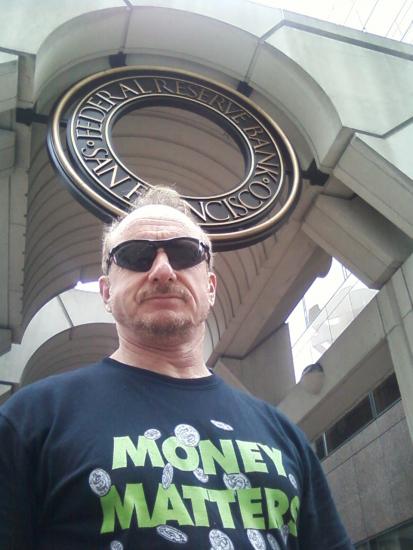
I am visiting the Federal Reserve in San Francisco

What they have to say is enlightening!

Read on dear reader............


THE DEBT CRISIS


It is no secret the U.S. government has amassed a lot of debt. Many people don’t give government debt much thought and indeed, some believe the government can just spend money on whatever it sees fit and the world will be better for it.

Thankfully, most politicians from both sides of the aisle realize, at least to some degree, that unbridled government spending is not ideal. History dictates an over spending government will eventually run the balance sheet into the rocky shoals of a national debt crisis.

The consequences of that, albeit a rare occurrence, can be very severe when it occurs, and the event affects almost every income level.

Government debt, like all debt, has to be paid back at some point. The idea that “deficits don’t matter” has been bantered about the political aisles from time to time, but deficits do matter in my house, and probably in yours as well.  Public debt is no different, although some would like to think so.

Although the U.S. government has been running up deficits for years, the last two decades has seen an unprecedented acceleration. Y2K, 9/11, the dot.com blowup, and the 2008 real estate and banking implosion (among other events) were all deemed critical enough to warrant even more borrowing to address each crisis.

Because of Covid, the last 12 months has witnessed even more government spending and has dwarfed all other previous events.

Although spending does not necessarily imply debt accumulation, in the case of the U.S. government, most of the spending has been accomplished by fiat money creation (money printing), or by tapping the global credit markets, both of which just rack up more debt.

Considering it took about 200 years to amass the first trillion in government debt, total U.S. debt has now ballooned to 23 trillion in a few short decades. The last 12 months alone has seen about 6.8 trillion in new debt. This does not include the proposed two billion in infrastructure repair currently on the table from the Biden administration and billions more for ongoing assistance to the credit markets supporting U.S. financial and business institutions.

Keeping those figures in mind, an easy argument could be made the path we find ourselves on is unsustainable. Debt cannot be accumulated ad infinitum.

Since debt is future income brought forward and spent today, debt can only be repaid essentially by working for no pay sometime in the future, for what is earned only goes to paying back what was borrowed previously.

With 23 trillion in debt and climbing, the amount is so large, those paying most of the bill will likely not be the ones who borrowed it (us).

This means, unless the U.S. adopts the attitude that deficits do indeed matter, it will be our children (and their children) that will suffer the eventual consequences of our borrowing.

Some argue the spending is necessary to solve current crises and make a better future for future generations.

An easy argument to be made by those doing the borrowing.

In fact its so easy, borrowing has obviously been a commonplace solution for decades.

As to the actual consequences, many believe U.S. debt can be just wiped clean in some sort of jubilee event (see debt jubilee- Wikipedia).

If this is true, one could argue we should spend as much as possible and as fast as we can to fix all the ills in the world.

However, something (hopefully) in your brain tells you there is something amiss with this conclusion.

No matter what the reader believes, debt and deficits do matter.

History tells us without exception, debt cannot just be wiped clean, and that the more debt that is accumulated, the more difficult the payback will be.

It is argued that the money spent during the creation of all this debt has been necessary, whether it be for social improvements or crisis mitigation.

Whatever one believes, the burden we are leaving to future generations is real, is massive and is getting worse by the day.

If it’s our children’s money we are spending, and it is, might it be better left for them to decide what’s necessary at that time and for us to stop the borrowing?

Should we instead limit our own spending to what money we do have?

And if we don’t have enough for our current needs, to work harder and earn it ourselves?

Moreover, if the powers at be cannot make due with the trillions they already have, perhaps we should somebody in there that can?

These difficult questions must be answered at some point. Either that or we continue to nail future generations to the cross of our gross economic mismanagement.



---

SCIM METHOD OF INVESTING
 

Knowing when a market is setting up to correct is the Holy Grail in investing.  Many advisors and investors adopt the methodology to just buy and hold. However, readers of Money Matters know I advocate a more hands-on approach to portfolio management that includes an attempt to accomplish some degree of portfolio protection.

What I mean by this is that investors can actively try to protect profits and guard against losses instead of just sitting on their hands by adopting some basic strategies.   

Decades ago I developed such a method called “The Safe and Conscious Investing Methodology” (SCIM).

Let me begin by saying no one can predict market movements at any time and no guarantees can be offered that gains will be protected or losses will not be realized. After all, investing involves risk.

Much like the study of volcanos, volcanologists can look at what is happening but cannot guarantee what will happen. The same goes with market prognostications. There are no guarantees of any kind. If an investor cannot tolerate risk, they consider FDIC bank products and there are varying strategies to consider there as well.

To utilize SCIM means the advisor monitors various things not only happening in the markets, but in the economy as well.

Needless to say, an economic background would help facilitate this monitoring, for without such education, one would not know what to look for when it came to the economic portion of the strategy.

In lieu of using SCIM, the buy and hold strategy (which I call  “do nothing” advisory) exists on the principal markets that always recover.

I am of the opinion the do nothing principal is flawed on the most fundamental of levels. Remember, advisors stating that markets always comes back is technically illegal. That illegality comes from the basic rule that advisors are strictly forbidden to guarantee any market direction of any kind at any time.

However, if one believes markets always come back, it is my opinion an advisor is not needed, and that one could just buy a broad market representative holding that attempts to mirror an index, purchased through a discount brokerage firm, and be done with it.  With no advisor, there would obviously be no advisor fee as well.

The SCIM method, instead of just buying and holding, looks at a variety of events and movements in the market and economy, then considers what the markets have done in the past to guide the advisor as to what may happen in the future.

What to look for is the key when attempting to limit downside using SCIM.

An example of an SCIM event is illustrated stating the old adage that stocks and bonds have a tendency to move opposite of each other. Although not always true, it happens enough times for a mix of stocks and bonds to be a common recommended stock allocation rule.

(https://www.investopedia.com/articles/investing/062714/100-minus-your-age-outdated.asp).

SCIM looks at many events, including the stock and bond relationship, and how it is changing over a given period of time. Other observations in SCIM consider action in the Fed Funds arena, interest rates, the Repurchase Agreement facility, (REPO), overseas markets, currency fluctuations, political considerations and movements in certain market sectors like fixed income, consumers staples, utilities,  preferred stocks, real estate investment trust (REIT) and other areas.

Although the reader may not fully understand all the considerations that SCIM looks at, just know that the events occurring in multiple areas of the economy and in the markets may alert an astute economist and an experienced advisor that something may be occurring beneath the surface that could erupt into a more serious event.

Although no methodology can guarantee anything when it comes to the stock market, much like a volcanologist who studies underground movements and occurrences beneath a potential volcano, there can also be tremors felt in the markets that may indicate something far more terrible is about to occur.


Opinions expressed here are those of Mr. Cuniberti and not those of any bank or investment advisory firm. Nothing stated is meant to insure a guarantee, or to be construed as investment advice. Neither Money Management Radio (“Money Matters”) receive, control, access or monitor client funds, accounts, or portfolios. For a list of the services offered by Mr. Cuniberti, call (530)559-1214. California Insurance License #0L34249 and Medicare Agent approved.  Insurance services offered independently through Marc Cuniberti and not affiliated with any RIA firm or entity. Email: news@moneymanagementradio.com. No person or methodology can predict market movements of any kind. Past performance is no guarantee of future results.


 

The REAL damage from CoVid update 4/10/2021


Hello Money Matters Fans,

The damage from CoVid-19 in both economic terms and human lives is tragic. The economic devastation hoisted upon the world’s economies by the CoVid shutdowns is unprecedented.

It is no secret I have been against shutdowns from the onset of the virus and have written such on numerous occasions.


Update March 7 2021


Debt = Interest Rate issues 


Hello Money Matters fans,

The stock market sold off hard last Thursday and the reason is believed to be a spike in interest rates.

Although it is thought by many the Federal Reserve (the FED) controls all interest rates, they actually control only one part of the interest rate arena, called the Overnight Discount Rate.

This is the interest rate the banking sector pays to borrow money for overnight operations. These overnight loans are a mainstay of the banking system. Banks borrow huge amounts on a daily basis while other banks deposit excess money into the same pot. Think of this overnight facility as a huge octopus taking in money and handing it out every moment of every day, all to fund banking operations which keeps the economy functioning.

The rest of the global bond market however and its interest rate is not controlled by the Fed simply because it is worldwide and encompasses too much money.

Think of it as a much larger octopus which operates worldwide.

What is the bond market?

Bonds are simply IOU’s. There is a lender and a borrower like any other loan. The financial sector calls them by many names to confuse you. For example, when a city borrows money, it’s called a muni bond. When money is borrowed for a house, it’s called a mortgage. When the U.S. government borrows money, it is called a bond, a treasury or even a bill.  No matter what the name, it is all just debt.

There are all sorts of bond markets, from corporate bonds to mortgage bonds and all types in between. Much of the world’s bonds are publically traded in the bond market.

Bonds pay an interest rate. The rate is to compensate the lender for loaning money. The riskier the borrower, the higher the rate is paid by the borrower to the lender.

The U.S. government might pay a very low rate to borrow money, while a financially strapped company might pay a higher rate.

Higher rates are also paid commensurate with how long the loan will be. The longer the loan, the higher the rate paid.

When things are calm in the world economies, rates remain fairly stable or may even fall.  When investors becomes worried about something however, rates will generally start rising. When they rise quickly, it can signify the onset of a panic or at least the fact that something is spooking market participants.

A worrisome world or economic event that threatens the stability of the financial environment can cause rates to spike, but the most common cause for a spike is a concern that inflation will start to accelerate.

As detailed in a previous Money Matters article entitled: “A look at Inflation”  (https://www.theunion.com/news/business/marc-cuniberti-a-look-at-inflation/), I detailed how the creation of too much money by a government can cause “monetary” inflation. Monetary inflation is the most insidious type of inflation and can be the most damaging to an economy.

Trillions of dollars have been created for the CoVid-19 rescue and bailout packages by the U.S. government and indeed governments everywhere. It is no surprise that because of this fact, the bond markets may be sniffing out coming inflation, and perhaps a lot of it.

Since inflation is the loss of purchasing power of a currency over time, when the bond markets think inflation is coming, rates rise, as lenders require higher interest rates to compensate them for the loss of purchasing power, which will be caused by that very same inflation.

When rates rise, investors fear that the copious amounts of money currently flooding into the stock markets will slow, money will become tighter (harder to get and more expensive to borrow), and that will eventually cause a pullback in stocks.

The stock markets therefore look ahead, and the selling begins. If the rate creep turns into a quick jump in rates, stock market sell offs can intensify, which is what might have occurred last week. Only time will tell if the event was a one-off scare, or the start of something more insidious.

Be careful out there.

Opinions expressed here are opinion only, and not those of any bank or investment advisory firm. Nothing stated is meant to insure a guarantee, or to be construed as investment advice. Neither Money Management Radio (“Money Matters”) nor Bay Area Process receive, control, access or monitor client funds, accounts, or portfolios. For a list of the services call (530)559-1214. California Insurance License #0L34249. Insurance services offered independently through Marc Cuniberti and not affiliated with any RIA firm or entity.


Income Portfolio may be the ticket now!

Dividend Payers    Own 20  get a possible 80 checks or more a year!

Call me (530) 559 1214


The Debt Trap Are we in it ? Update 2 28 2021


Too deep a hole to climb out!


The debt trap


Stimulus and bailouts cost money. Not that you will get an invoice, mind you. Although that argument has been put forth. Issue an invoice for government spending on an itemized bill to every working American and it is argued we would see fewer military excursions, fewer social programs and fewer bailouts.

The reasoning for government spending is either for defense, improving the greater good by whatever method, or addressing an economically stressing event like COVID-19. The term often used is the government borrows in order to spend so we “grow our way out” of an economic problem.

When the government spends money, it either borrows it, taxes it or creates it.


The Federal Reserve creates money, and then loans it to the Treasury in exchange for IOU’s.

Since the Federal Reserve is a quasi-government agency, the borrowing is more like a bookkeeping entry than an actual lender and borrower. The Treasury is supposed to pay it back to the Federal Reserve, but in actuality has been running up the tab for decades. That “tab” is called the U.S. debt, and it stands at about 23.3 trillion (look up the U.S. debt clock webpage for a sobering moment).


The debt doesn’t include what is called unfunded liabilities. Unfunded liabilities is not what we owe right now, but what we promise to pay sometime in the future. Examples of these might be pensions or bills that come due in the future but are not due yet.

The United State’s unfunded liabilities are so large a number, the estimates vary depending on whom you ask. Wikipedia pegs the official figure at 43 trillion while Forbes clocks the figure at 210 trillion.

The argument for government spending revolves around the concept of return on investment. Borrow a buck and plow it into the economy and it will generate more than a buck in return. The return might come from a factory that is built or some kind of other investment that returns more money to the economy than the original dollar borrowed, as measured by U.S. Gross Domestic Product (GDP).

Continue to borrow, however, and the risk of a debt trap materializes. The term “debt trap” was originated by the Bank for International Settlements.

As long as the return is positive, a government can continue to borrow. Simply put, if every borrowed dollar yields more than a dollar, any new borrowing will grow an economy by more than a dollar, enabling the dollar to be paid back while the residual stays in the economy. The more money borrowed, the more the economy grows. Continue to borrow and the interest to service the debt continues to grow. Much like someone endlessly running up credit cards, eventually the principal cannot be paid as the interest continues to grow as more money is borrowed.

The debt trap occurs when each dollar borrowed by a government yields less than a dollar in benefit. Instead of getting more back than what is borrowed, the return is less than what is borrowed. This is the exact opposite of what occurs when the return is positive and the economy benefits. Instead, the debt trap is when the yield goes negative and for every dollar borrowed, less than a dollar is produced in the economy and for every dollar borrowed, the economy now shrinks.

Think of it like transferring water using a bucket with a hole in it. The more you use it, the more water you lose. The same goes with a debt trap. For every dollar borrowed, the economy gets worse. While that occurs, however, the debt and its interest continues to increase. To stay afloat, the need to borrow more accelerates. As more is borrowed, more is lost.

Hence the trap. You cannot go forward and borrow more without making the situation worse, yet the debt cannot be serviced without additional borrowing.

Opinions vary as to where U.S. debt is in regard to “trap” conditions, but many argue we’re close to it now, while others claim we are well past the point of negative returns and already in the trap.

In summation, the answer from many in government about how to fix the debt problem is to “grow our way out of it.” The problem is we may have already passed the point of no return and be caught in the trap making the situation worse with each passing day.


Opinions expressed here are those of Mr. Cuniberti and may not reflect those of any media outlet. For a list of the services offered by Mr. Cuniberti, call 530-559-1214. California Insurance License #0L34249 and Medicare Agent approved. Email: news@moneymanagementradio.com.


Call me (530) 559-1214


Fire Insurance available


Stock manias like GAMESTOP and BITCOIN Update 2 20 2021


FAST MONEY

QUICK PROFITS

Alluring?

Read on....


With the recent price explosions of both bitcoin and GameStop and until just recently, some stocks in the biotech sector, it may be time to step back and take a look at the broader picture of why these events might be occurring.

It really doesn’t matter what the asset is. Instead, we should see if there is something more in play here than some stocks whose prices keep going up.

These types of explosive price moves certainly make for great headlines. Seeing a stock gain five, ten or fifteen percent day after day is rare, but when it happens, it attracts investors like flies to fodder.

It is more common to see price moves like this during over-heated and extended stock markets then to witness them during a crash phase. Think back to the dot.com era and investors saw similar astonishing gains during that mania as well.

We all know how that ended.

Simply put, when some crazy stock rallies like a rocket ship, some people make money. Usually the early arrivals to the stock party. Many of these events can go on much longer than what may seem reasonable. It is said among professional traders that “markets can stay illogical longer than you can stay liquid”. In other words, a stock that makes amazing gains day in and day out can continue to make these gains for longer than you might think possible. It is what makes these events so magnetic, and why even those late to the party can make some money. The very late arrivals however, usually only see the crash that follows.

What drives these events?

As markets rise, investors experience the euphoria of quick and easy money, and sometimes lots of it. Often the gains happen so fast, the participant starts thinking crazy things like becoming a permanent day trader, retiring at age 30 or setting their sights on nice round number like a million dollars.

Meanwhile “Mr. Market” sits back and grins, as these occasional manias are all in a day’s work.  If Mr. Market could talk, it would say, “Wait for it”.

To say most of these events end badly for many is an understatement. The only thing that destroys more money faster than a stock mania is a Ponzi scheme, or something similar.

More importantly is to understand what is it about investor’s mindset that causes these ballistic rallies to occur in the first place.

With rising markets come loose lips, meaning the more stocks rise, the more money is made, and the more money is made, the more people talk about it. An investor gets to the point where everyone around them is claiming newfound riches and then the “FOMO” mindset (Fear of Missing Out) combines with the “greed’ DNA we all have buried deep within, and the trap is set.

Good sense is then tossed out the window, replaced by an investing APP on their smart phone or by opening up a brokerage account. A deposit check is close behind.

The “buy” button is then pushed, officially signaling a “let the games begin” moment.

Then the fun (or lack of it) begins.

Next time when this urge strikes you , instead of rushing out and investing your rent check or mortgaging your house, realize two things:

Explosive price moves are rare, and even more rare is that they are seldom driven by real fundamentals. It’s just a lot of people like you, all thinking and hoping for the same thing called “the greater fool theory”. Which is to say, some fool (go find a mirror) is buying something they know little about, in hopes another fool comes along (hence the “greater” label) and buys it from you. Just don’t be the last fool to enter the fray, and there will be many. They are the ones that usually get burned.

The second thing to think about, if you’re thinking at all during all of this, is that these types of manic stock buying events usually occur during extremely overbought and hyped up markets.

Which is to say, the market as a whole has probably lost its mind right along with you, and instead of writing a check, it may be time to cash one out instead.

Ignore at your own peril.

Opinions expressed here are those of Mr. Cuniberti and not those of any bank or investment advisory firm. Nothing stated is meant to insure a guarantee, or to be construed as investment advice. Neither Money Management Radio (“Money Matters”) receive, control, access or monitor client funds, accounts, or portfolios. For a list of the services offered by Mr. Cuniberti, call (530)559-1214. California Insurance License #0L34249 and Medicare Agent approved.  Insurance services offered independently through Marc Cuniberti and not affiliated with any RIA firm or entity. Email: news@moneymanagementradio.com.


===================================================


Money Update INFLATION ON ITS WAY? Update 2 16 2021


Is there inflation in our future?

Depending on what kind of inflation and to what degree makes answering this question a bit more involved than just a yes or no response.

Inflation to most people means the increase in the prices of the things we buy. Why it happens and to what degree it occurs requires we take a little trip through our economic schoolbook.

One might describe inflation as either the fear your dollar will lose value (think Mexican Peso) or something will soon rise in price making it more expensive (think home prices in the mid-2000’s).

We could add a third definition by saying that in lieu of thinking something could cost more later, as in the above home prices example, one could also describe it as the hope something will be worth more later (think Bitcoin) hence turn the owner a profit. A rising bitcoin price is just another form of inflation in the truest sense of the word.

No matter what view applies to your perception of inflation, the concept centers around the same event: a change in price.

Inflation can have many causes, and without getting to deep into the weeds, just know the most common type of inflation is monetary (think money) inflation. This type of inflation can be the most insidious and dangerous type, but it is also a type of inflation that can usually be prevented if there is a will to do so.

Simply put, print a lot of paper dollars in a relatively fast amount of time and put those dollars into circulation and you will likely get monetary inflation.  All three conditions must be present to see monetary inflation.

Printing a lot of dollars means just that: creating dollars without regard to restraint.

The timeframe that this printing is accomplished is also a contributing factor. Print copious amounts of currency over centuries and inflation won’t  likely be an issue. However print a lot of dollars quickly and the second part of monetary inflation equation is complete. The third part of the equation is the circulation of the newly created dollars. Burying newly created currency in the ground so no one can use it will cause no inflation. The money has to circulate and be used by people in the economy to cause inflation.

Eliminate or avoid any of the three conditions (quantity, timeframe or circulation) and monetary inflation will not occur. Do all three and monetary inflation will eventually occur.

Most people can conceptualize monetary inflation when the Mexican Peso is mentioned, and rightly so. Although many will not be able to put their finger on the exact mechanism of the Peso event, most will grasp the general economic principle at work. The Mexican government printed too many Pesos. They did it over a relatively short amount of time, and the Pesos were distributed and used in the economy by the Mexican people.

Fast forward to the U.S. 2008/9 bailout period. Most analysts expected inflation due to the trillions of dollars created that were used in the bailouts.

We did see some inflation in certain asset areas but for the most part, prices remained stable and actually fell in other areas. What was missing in the three part monetary equation was the circulation variable.

In 2008/9, most of the trillions went into the banking `system` and not to the average everyday consumer. The banking sector dumped questionable loans (think mortgages) onto the backs of the U.S. Federal Reserve Bank (FED) in exchange for cash. The cash then paid off some of the banks’ bad debt and enabled them to continue to function. What is not widely known however is that a good portion of the money was given right back to the FED in exchange for interest payments in a program called Excessive Reserves.

So to be clear, the Fed gave money to the banks, then the banks gave much of that money right back to the Fed and got paid to do so.

Hence, much of the newly created FED money never made it into the hands of the consumer and subsequently into circulation.  It came right back to the coffers of the FED. Since this money did not circulate, there was little to no monetary inflation.

This time around, the CoVid-19 bailouts have about half of the money going to consumers and businesses. Although trillions will continue to flow to the financial sectors (causing inflation in stock prices), much of this new money will go into public circulation.

That said, it is in this analysts opinion, inflation is on its way.


Opinions expressed here are those of Mr. Cuniberti and not those of any bank or investment advisory firm. Nothing stated is meant to insure a guarantee, or to be construed as investment advice. Neither Money Management Radio (“Money Matters”) receive, control, access or monitor client funds, accounts, or portfolios. For a list of the services offered by Mr. Cuniberti, call (530)559-1214. California Insurance License #0L34249 and Medicare Agent approved.  Insurance services offered independently through Marc Cuniberti. Email: news@moneymanagementradio.com.


Need policy?

Fire specialists

(530) 559-1214


Turning 65?

Agent

California License # 0L34249

(530)559-1214


Syndicate content